

INDUSTRIAL NEWS
In recent years, laser welding machines have gained significant popularity in the automotive industry due to their numerous advantages over traditional welding methods. This article aims to explore the applications of laser welding machines in the automotive industry and discuss how they are revolutionizing the manufacturing processes.
1. Enhanced Precision and Quality:
Laser welding machines offer exceptional precision and accuracy, ensuring high-quality welds in automotive components. The focused laser beam allows for a narrow heat-affected zone, minimizing distortion and reducing the need for post-welding treatments. This precision is especially crucial for safety-critical components like chassis, exhaust systems, and airbags.
2. Improved Productivity:
Laser welding machines are known for their high welding speed, enabling faster production cycles. This increased productivity can significantly reduce manufacturing costs and meet the growing demand for automobiles. Additionally, laser welding machines can be easily integrated into automated production lines, further enhancing efficiency.
3. Lightweighting and Material Compatibility:
The automotive industry is continuously striving to reduce vehicle weight while maintaining structural integrity. Laser welding machines play a vital role in achieving this goal by enabling the joining of dissimilar materials such as aluminum and steel. This flexibility allows manufacturers to design lighter and more fuel-efficient vehicles without compromising safety or durability.
4. Complex Joint Designs:
Traditional welding methods often struggle with complex joint designs, limiting the possibilities for innovative automotive designs. Laser welding machines overcome this limitation by offering greater flexibility in joining intricate shapes and contours. This capability opens up endless possibilities for designers to create unique and aerodynamic vehicle structures.
5. Cost Savings:
While the initial investment in laser welding machines may be higher than traditional welding equipment, the long-term cost savings are significant. Laser welding requires minimal consumables, reduces scrap rates, and eliminates the need for additional post-welding processes. These factors contribute to lower production costs and higher profitability for automotive manufacturers.
6. Environmental Benefits:
Laser welding machines are environmentally friendly compared to traditional welding methods. They produce minimal smoke, fumes, and waste, reducing the carbon footprint of automotive manufacturing. Additionally, the precise nature of laser welding minimizes material waste, further contributing to sustainability efforts.
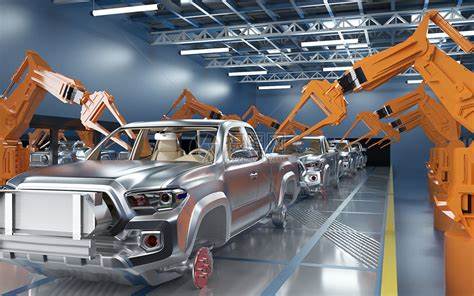
The applications of laser welding machines in the automotive industry are vast and transformative. From improved precision and productivity to enabling lightweighting and complex joint designs, laser welding machines are revolutionizing the manufacturing processes. As the automotive industry continues to evolve, laser welding machines will play a crucial role in achieving higher efficiency, cost savings, and environmental sustainability.