

INDUSTRIAL NEWS
CO2 laser cutting machine have revolutionized the manufacturing industry with their precision and efficiency. By harnessing the power of a high-energy CO2 laser, these machines are capable of cutting through various materials with incredible accuracy. This article explores the potential of CO2 laser cutting machines and how they are transforming the manufacturing landscape.
One of the key advantages of CO2 laser cutting machine is their versatility. They can cut through a wide range of materials, including metals, wood, plastics, and fabrics. This makes them suitable for a variety of industries, such as automotive, aerospace, and fashion. By using different power levels and focusing techniques, manufacturers can achieve precise and intricate cuts on different materials.
In addition to versatility, CO2 laser cutting machine offer exceptional precision. The laser beam emitted by these machines is extremely focused, allowing for highly detailed cuts. This level of precision is particularly important in industries where accuracy is crucial, such as medical device manufacturing. With a CO2 laser cutting machine, manufacturers can create intricate and complex designs with ease.
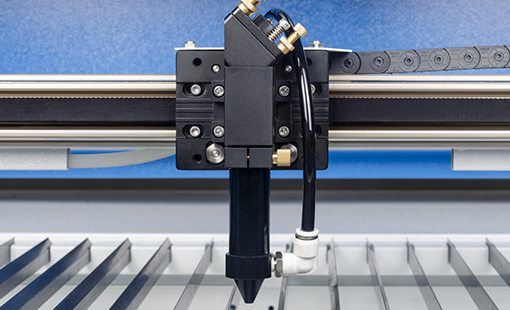
Another advantage of CO2 laser cutting machine is their speed and efficiency. Compared to traditional cutting methods, such as sawing or milling, laser cutting is much faster and requires less manual labor. This not only reduces production time but also minimizes the risk of human error. Additionally, CO2 laser cutting machine can be automated, further increasing efficiency and productivity.
CO2 laser cutting machine also offer environmental benefits. Unlike traditional cutting methods that may produce harmful fumes or waste, laser cutting is a clean and eco-friendly process. The laser beam vaporizes the material, leaving behind minimal waste and reducing the need for post-processing. Furthermore, CO2 laser cutting machines consume less energy compared to other cutting methods, making them a greener choice for manufacturers.
Despite their numerous advantages, CO2 laser cutting machines do have some limitations. For instance, they are not suitable for cutting reflective materials, as the laser beam may bounce back and cause damage. Additionally, the initial investment cost of a CO2 laser cutting machine can be high, which may deter some small-scale manufacturers. However, the long-term benefits, such as increased productivity and improved product quality, often outweigh the initial investment.
In conclusion, CO2 laser cutting machines have unlocked a world of possibilities in the manufacturing industry. Their versatility, precision, speed, and environmental benefits make them an invaluable tool for manufacturers across various sectors. As technology continues to advance, we can expect even greater potential from CO2 laser cutting machines, further transforming the way we manufacture and create.